Andes Workbench
Role: Lead UI/UX Designer
Year: 2025
Company: Amazon – Business Data Technologies (BDT) organization
Technology: Figma
The problem
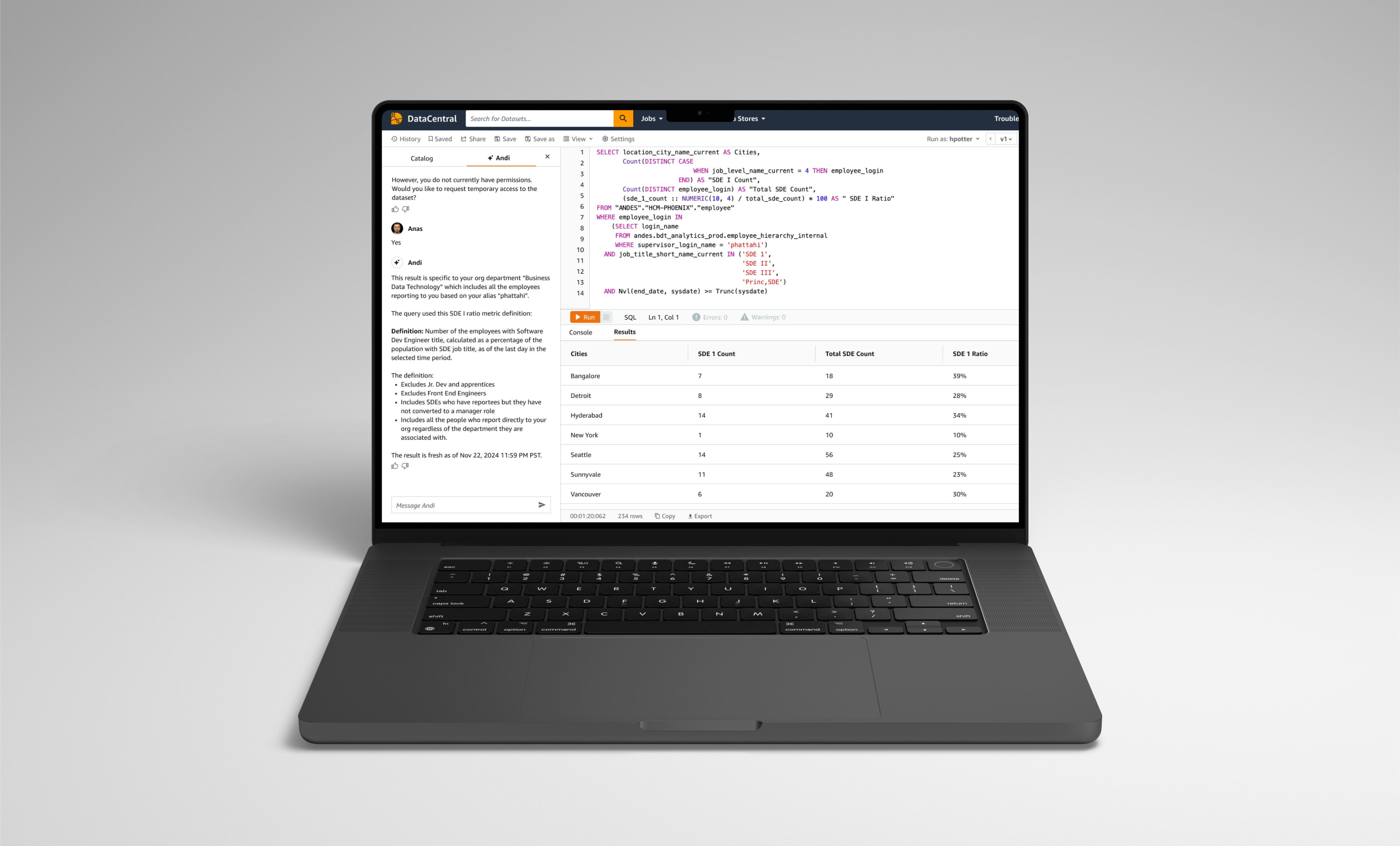
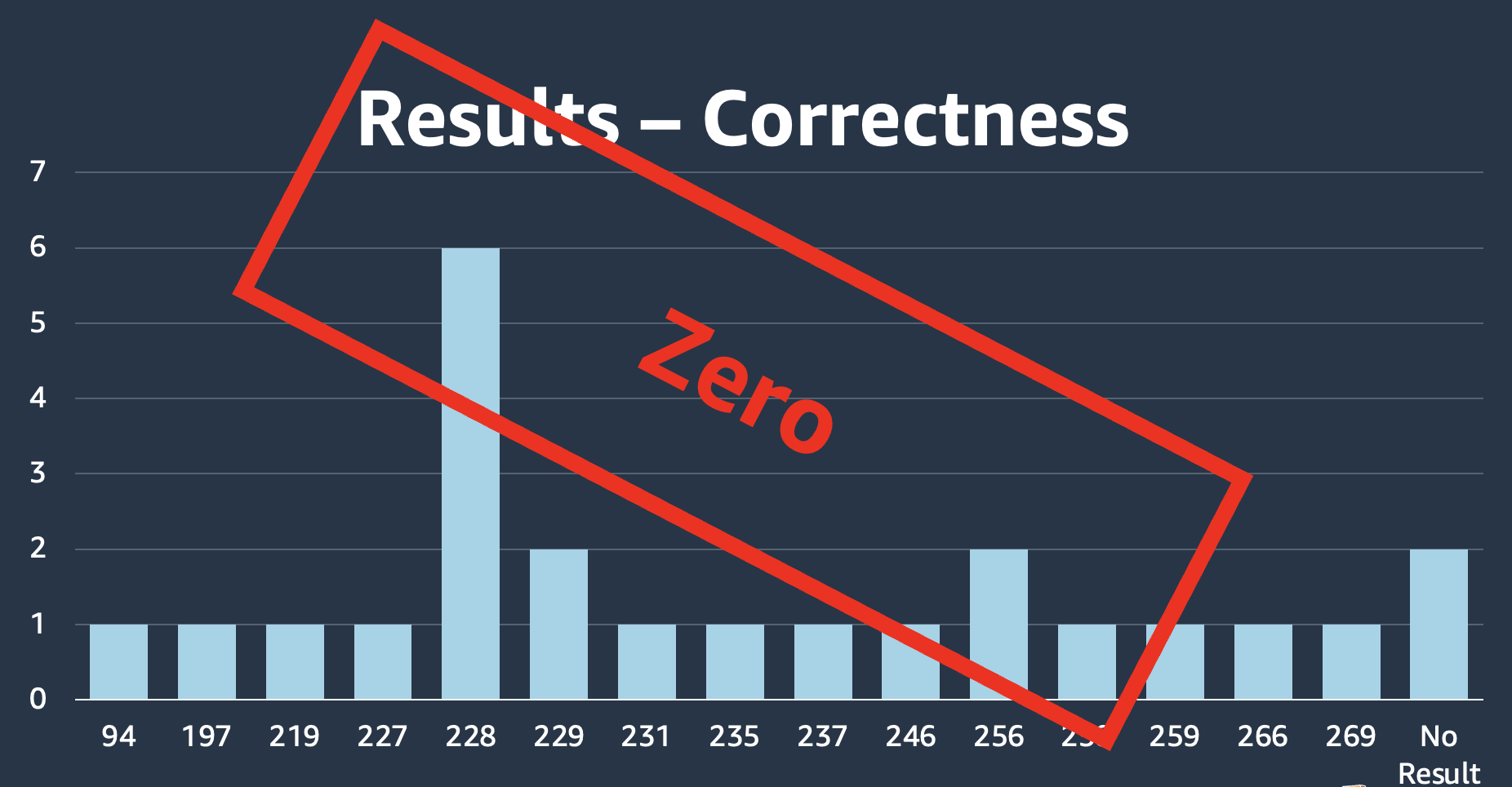
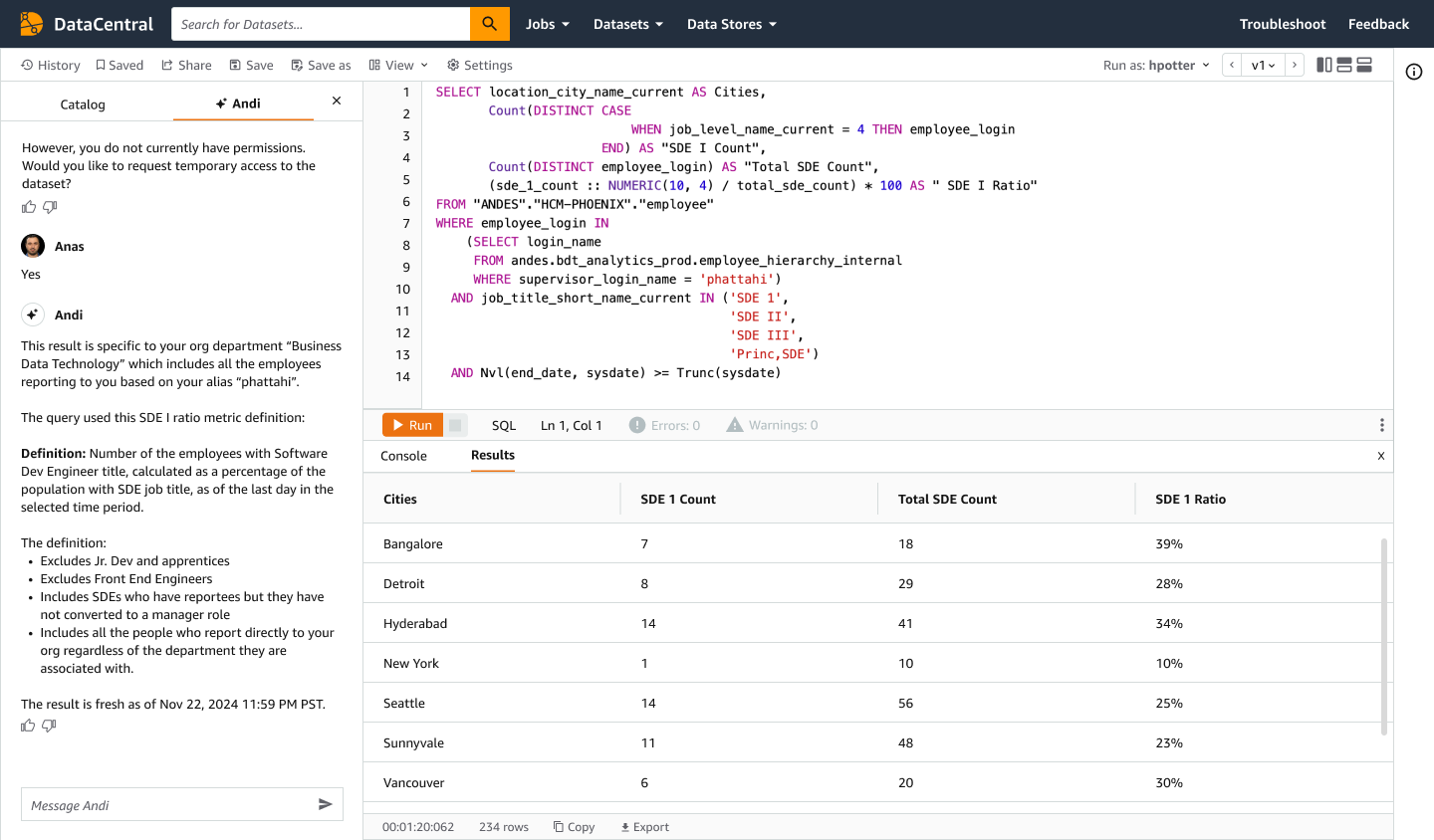
Amazonians lacked an AI-powered solution that made it easy to answer data questions, particularly for non-technical users. Answering even a seemingly simple question required navigating multiple challenges, including discovering the right data, understanding metric definitions, obtaining access to the necessary datasets, finding the appropriate compute or query tools, and having the technical skills to execute the analysis. To quantify this challenge, the BDT VP conducted an experiment with 25 leaders across the organization, asking them to answer a straightforward question: “What is the SDE1 ratio and total SDE count for your org, broken down by city?” Participants used more than 12 different approaches and multiple data sources, ultimately producing 14 distinct answers. Two participants gave up, and none of the 25 participants arrived at the correct answer, highlighting the significant barriers Amazonians face when trying to access and understand data.
The process
I worked directly with the BDT VP to develop a vision presentation for the CEO of Amazon Stores, defining the opportunity and long-term vision for AI-powered data experiences. To inform the design direction, I conducted a competitive analysis of AI tools to identify common interaction and design patterns. I also led two user research initiatives, a survey and series of user interviews, to understand where AI could provide the most value in Andes Workbench and what users would expect from an AI-powered experience. The survey explored use cases that could benefit from AI capabilities and users’ expectations for AI in Workbench, while the interviews focused on the value of AI-assisted SQL authoring, expectations for AI query generation, and preferences between conversational responses and single-query outputs.
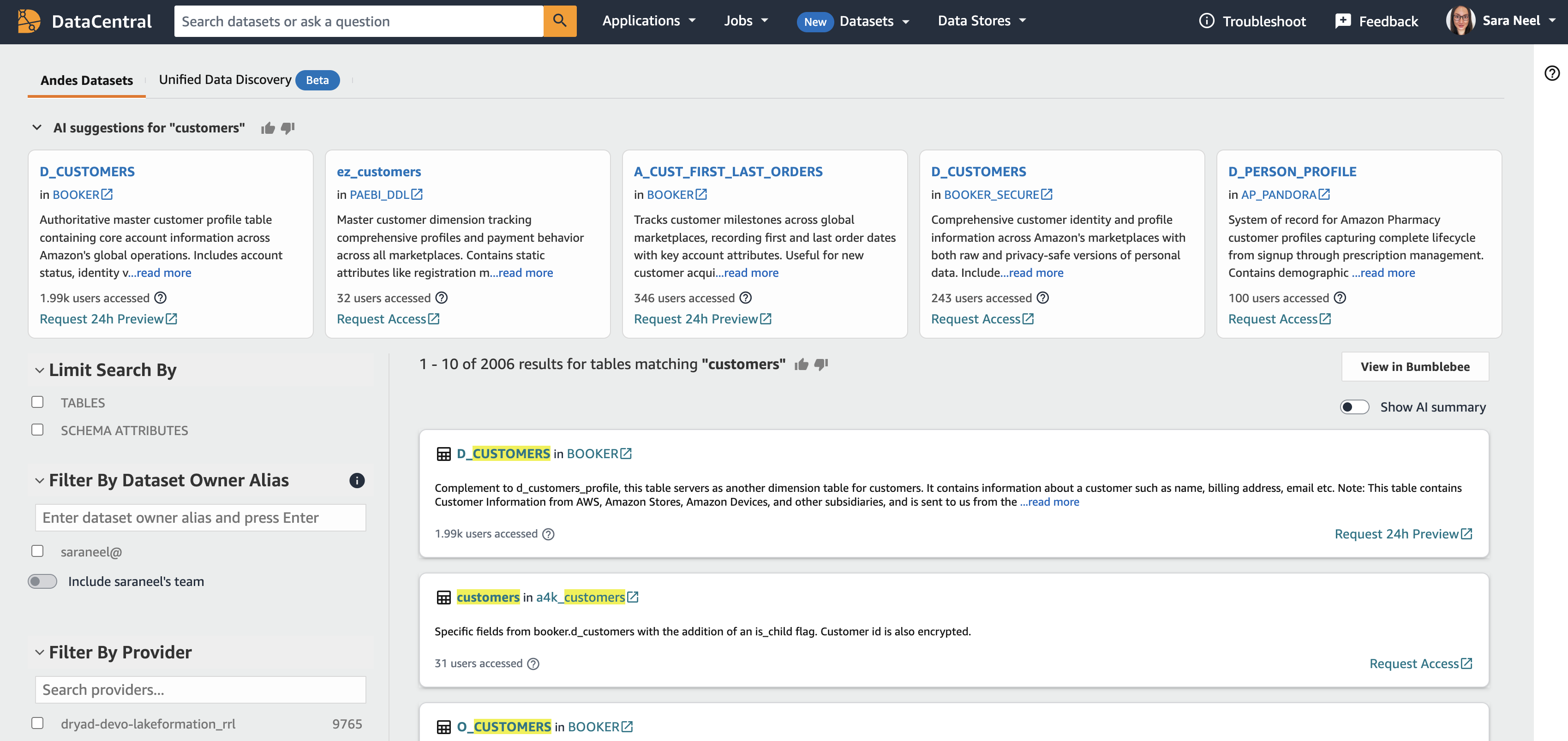
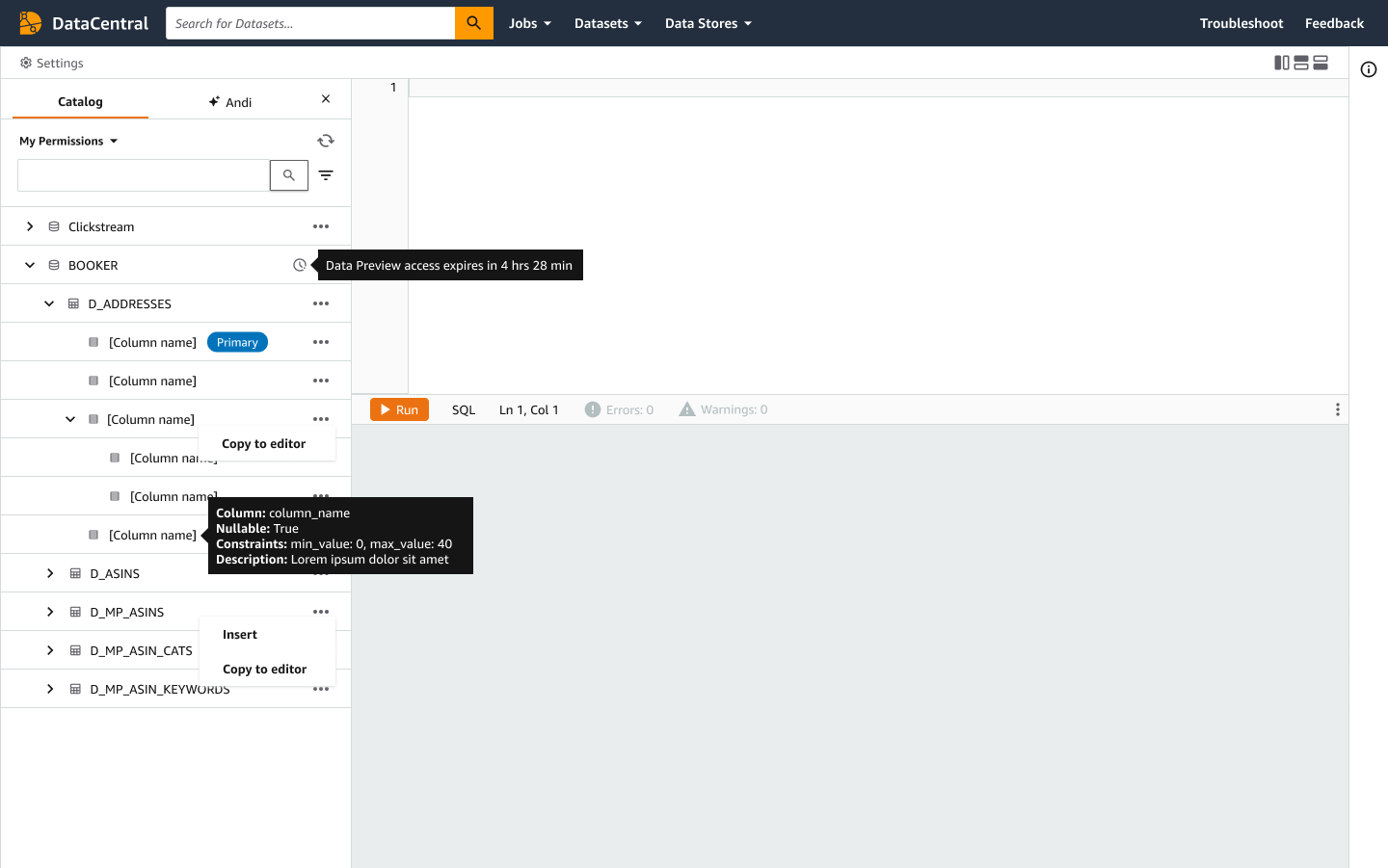
Based on these insights, I led the design and delivered mockups for the Andes Workbench P0 experience as well as its longer-term vision. I also iterated on and delivered designs for the Catalog feature and conducted UXQA on the developed UI to ensure the final implementation aligned with the intended experience and design direction.
Competitive analysis

Mockups
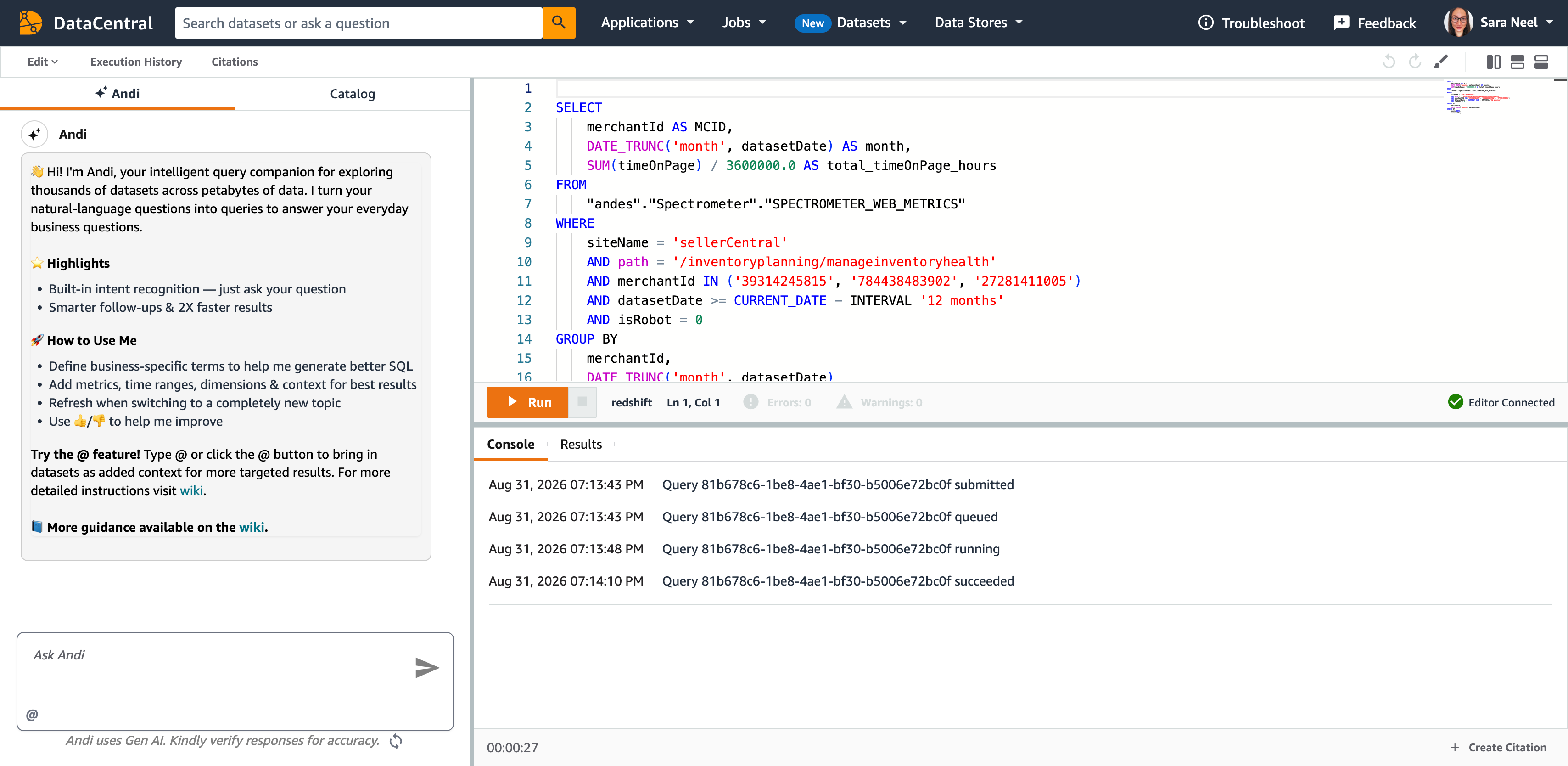
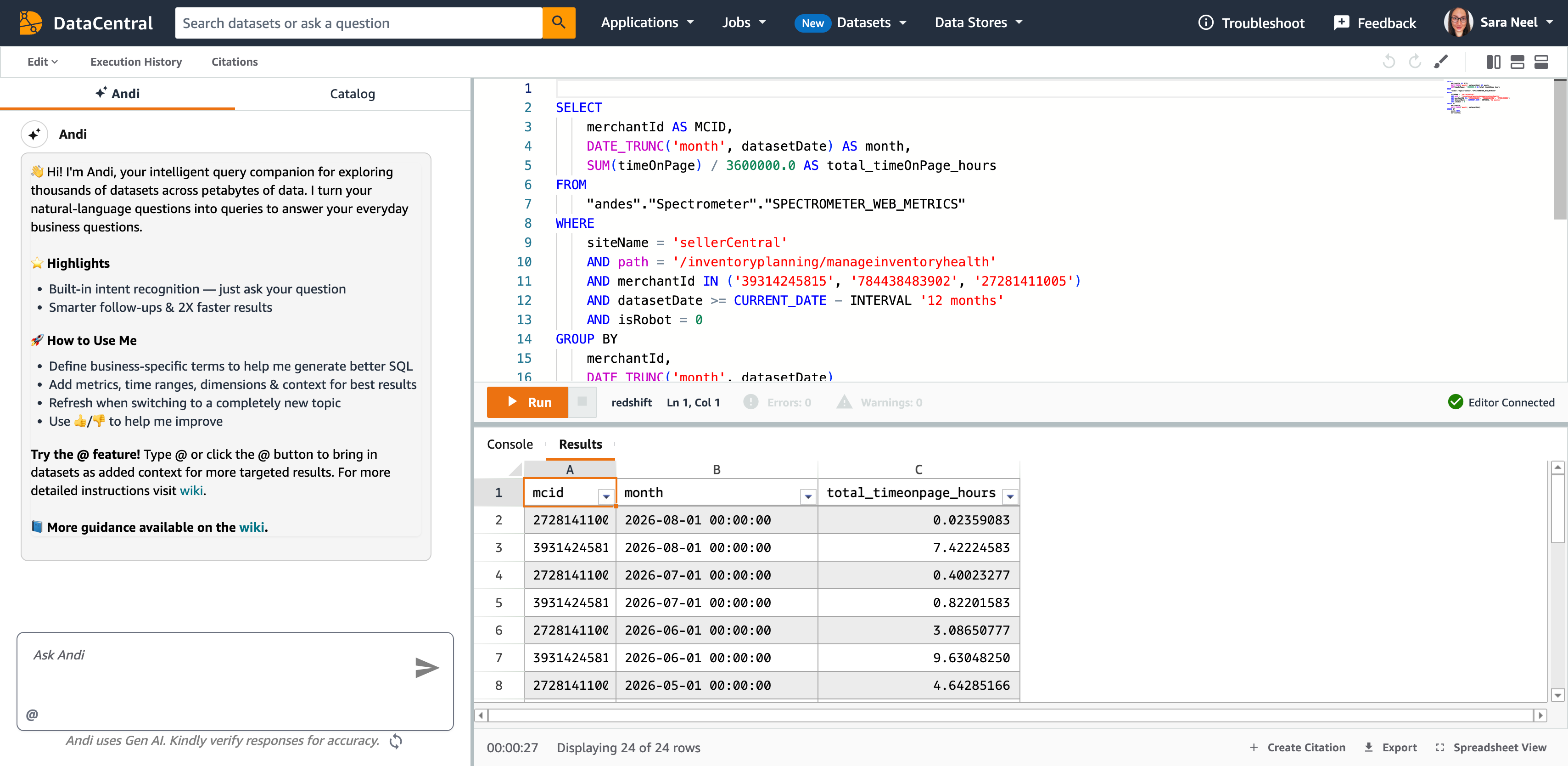
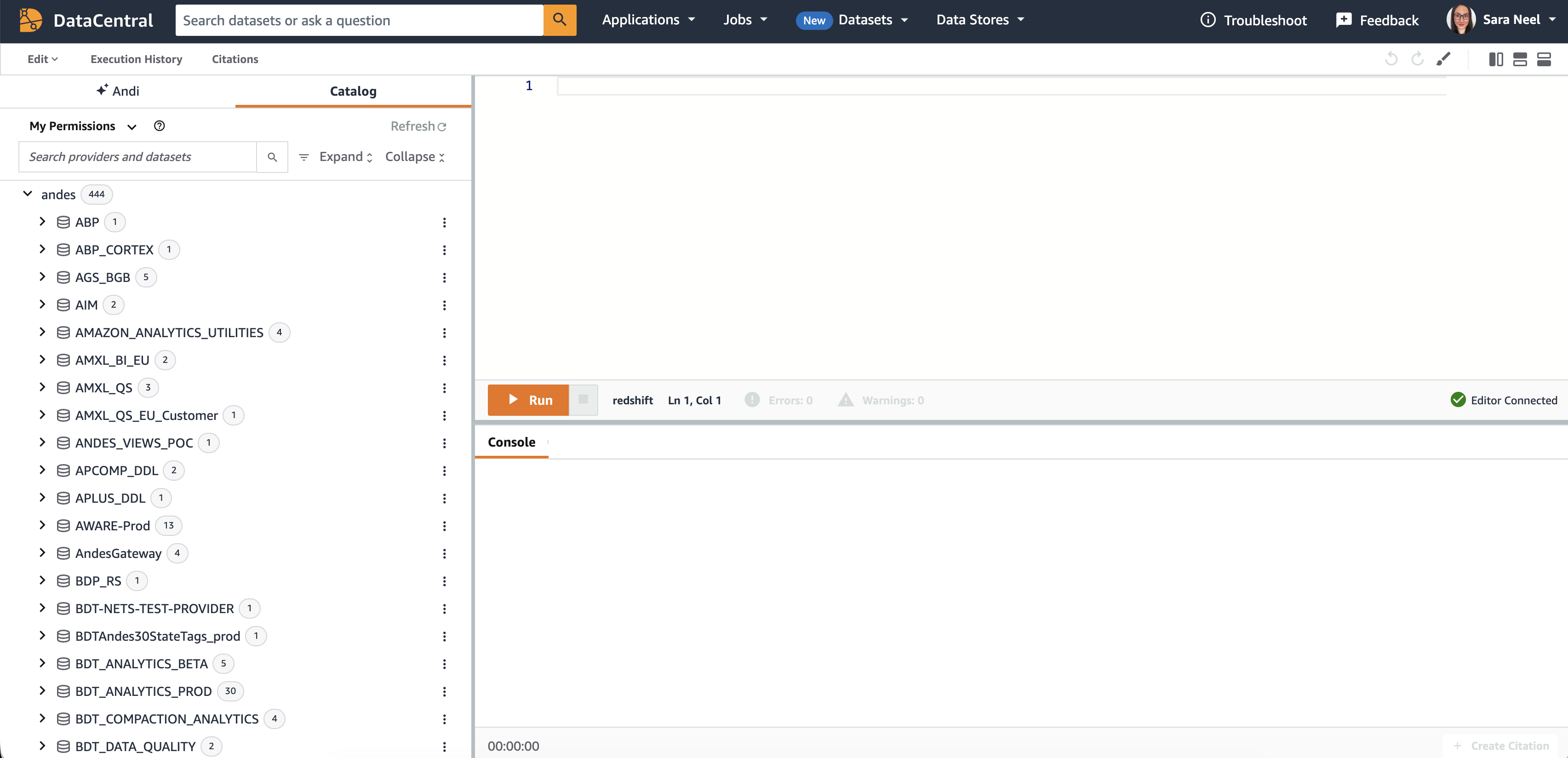
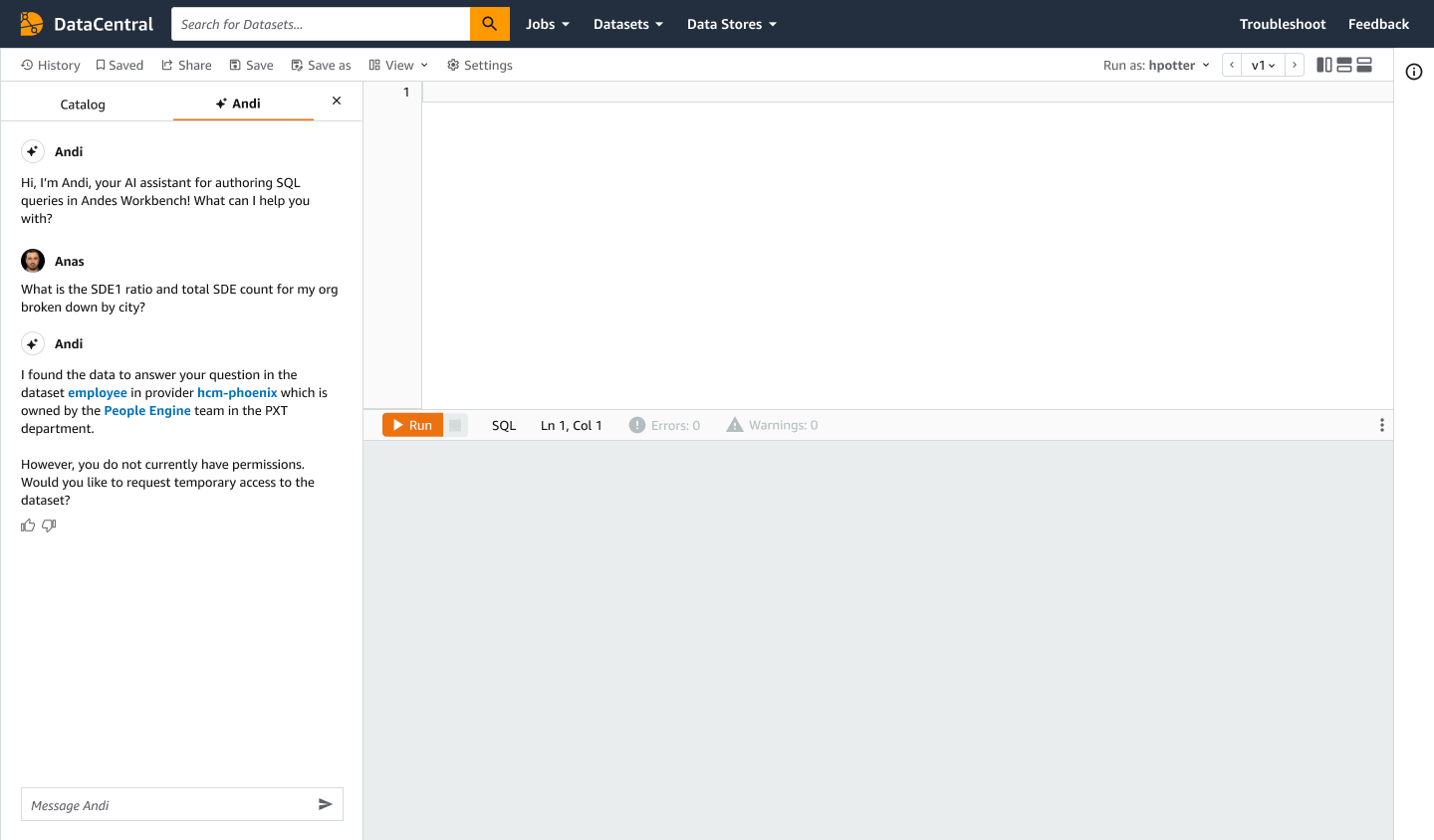
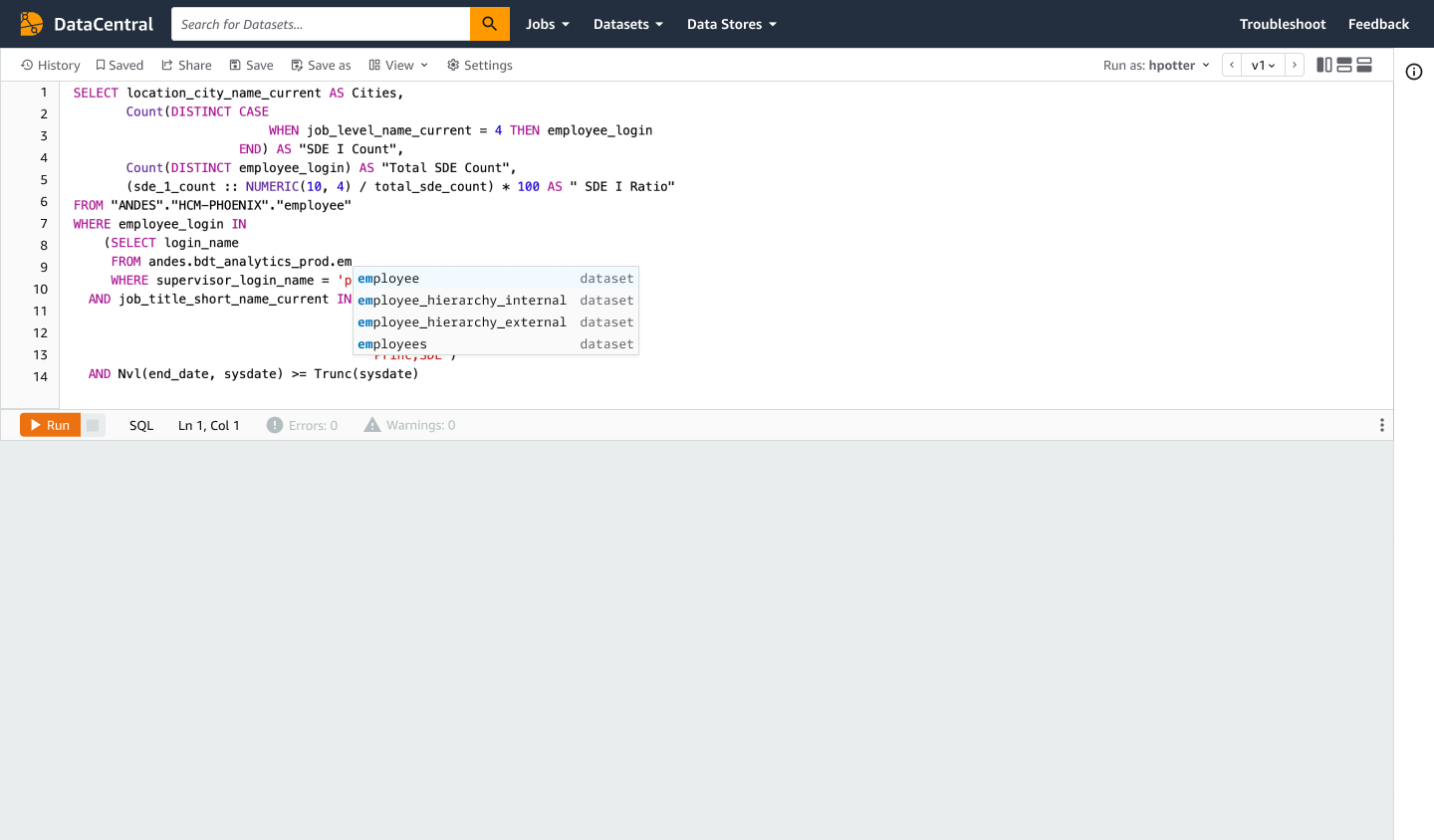
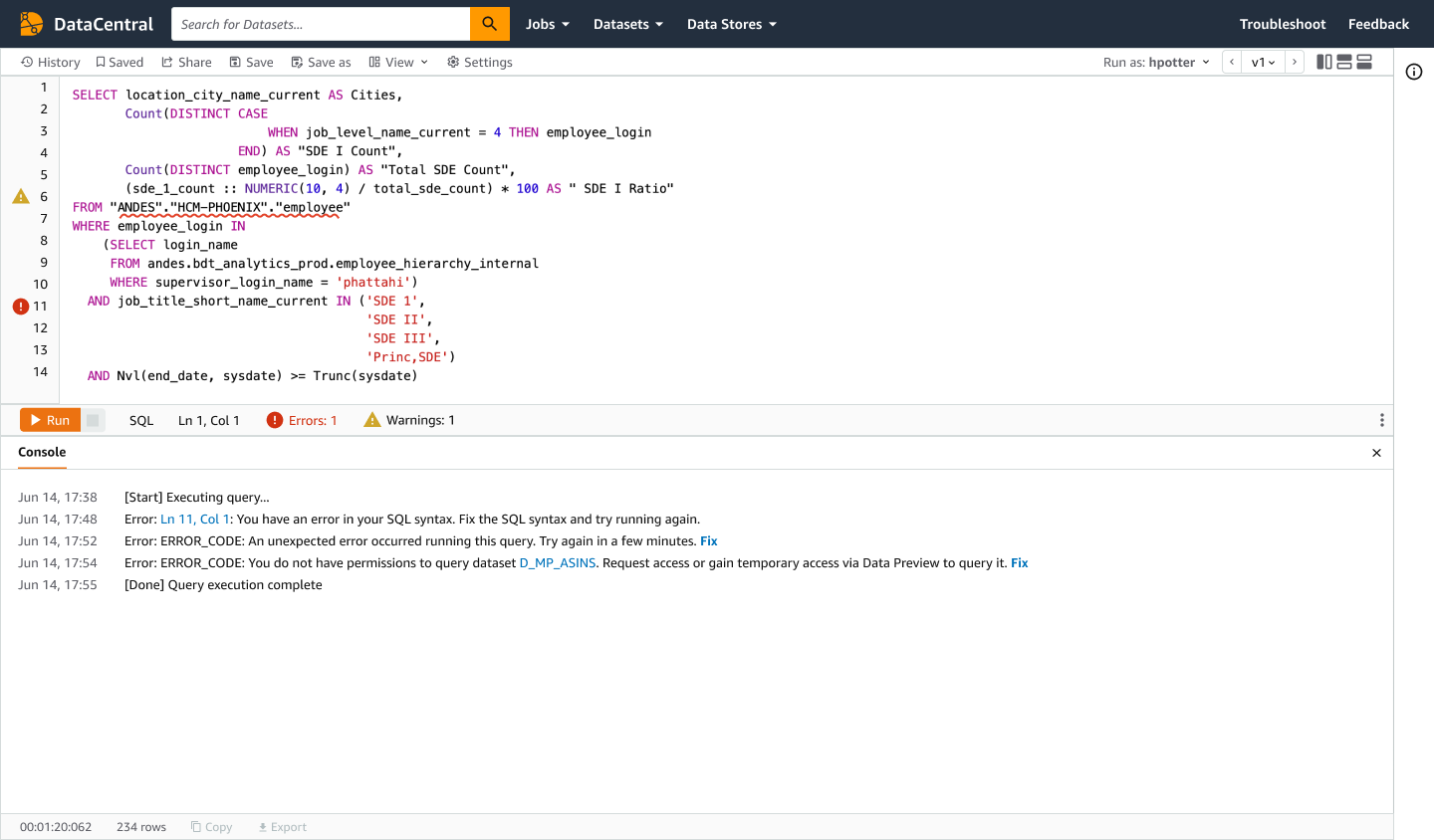
Users can ask Andi in plain language to discover datasets, generate SQL queries that answer questions based on Amazon’s data lake (e.g. “What was the top ordered product in Q3 2025?”, “What was the number of page views of the Seller Central Manage Products page in August 2026?”), and modify/optimize existing queries. SQL queries can be authored via the query editor with helpful features like autocomplete and highlighted errors, as well as executed directly in Andes Workbench to return an output. The Catalog feature shows the user all of the datasets they have access to, with the ability to search across the entire Andes data lake and request access to datasets directly from the Andes Workbench UI.
The result
Andes Workbench with Andi conversational AI P0 launched in Q3 2025, enabling users to easily use AI to generate SQL queries based on Andes datasets and execute queries with results. It has been well-received by users and its launch was the catalyst for additional AI features being prioritized and launched in DataCentral.
Outcomes
- From 1/1/26 – 9/16/26, there have been >1.3M Andi conversation sessions and >3.2M follow-up conversations
- From 1/1/26 – 9/16/26, there have been >6.5M query executions, >2M diff acceptances, and >95% diff acceptance rate
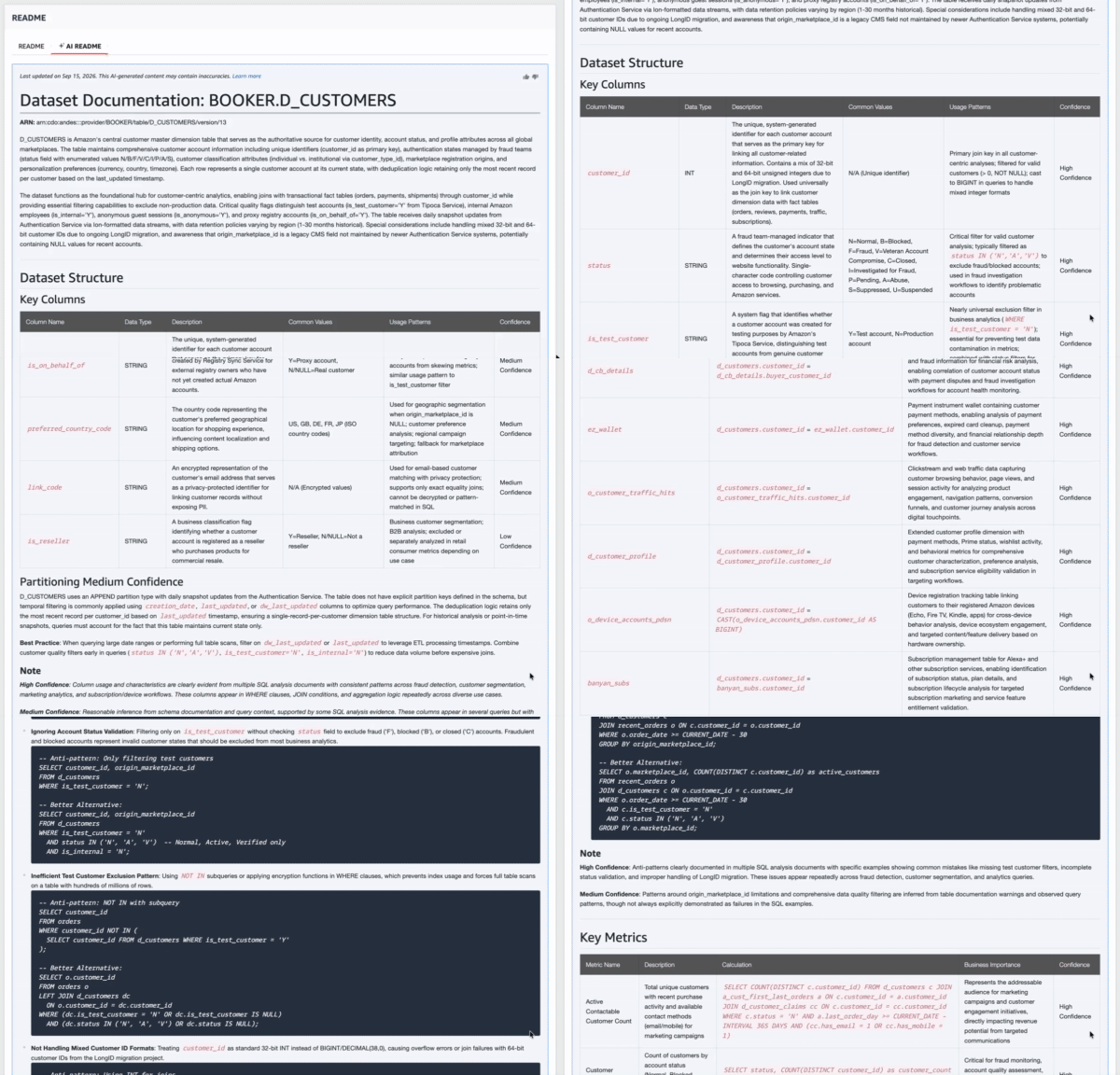
- AI README, AI description, and AI search results have since been implemented in DataCentral using the Andi AI functionality
- Execution history feature was prioritized and launched in Andes Workbench in 2026
User quotes
“I’m really impressed with Andi’s natural language to SQL capabilities. The direct integration with Andes makes it practical and useful right out of the gate – no need to learn new systems or move data around. It’s saving us time and making data access more straightforward. We also appreciate how the Andi team has been engaging with us thus far helping us to better fine-tune Andi for our needs and alerting us to tips/best practices to make Andi work even better for our org. Pretty exciting to see a PM without any SQL skills quickly generate a query to deep dive a WBR question on the fly.” – Beth-Anne Porter, Principal Product Manager, Commerce Solutions;
“Andi has significantly simplified the barrier to entry for Non BI’s (Product Managers, Business Analyst, and Account Managers) in International Seller Services to have access to optimal and accurate SQL writing capabilities. Our early beta testers have reported significant efficiency gains in their time to author + insights and are eagerly waiting for the launch to Workbench allowing them to make business data driven decisions faster.” – Aamir Momin , Senior Data Engineer, ISS
“The AI-generated README in DataCentral is a great resource for understanding a table’s high level description, key elements, and use cases. The ‘Related Tables’ and ‘Common Use Cases’ sections are especially valuable for helping new users join data correctly and apply it effectively in analysis. Performance optimization tips, especially the ‘anti-patterns to avoid’ would help non-technical users write efficient queries and potentially lower Redshift cluster compute costs” – Harsha Mulchandani, Manager, BIE – AMZL Field Support team (Orbit Org).
Andes Workbench demo
Screenshots of the developed UI